
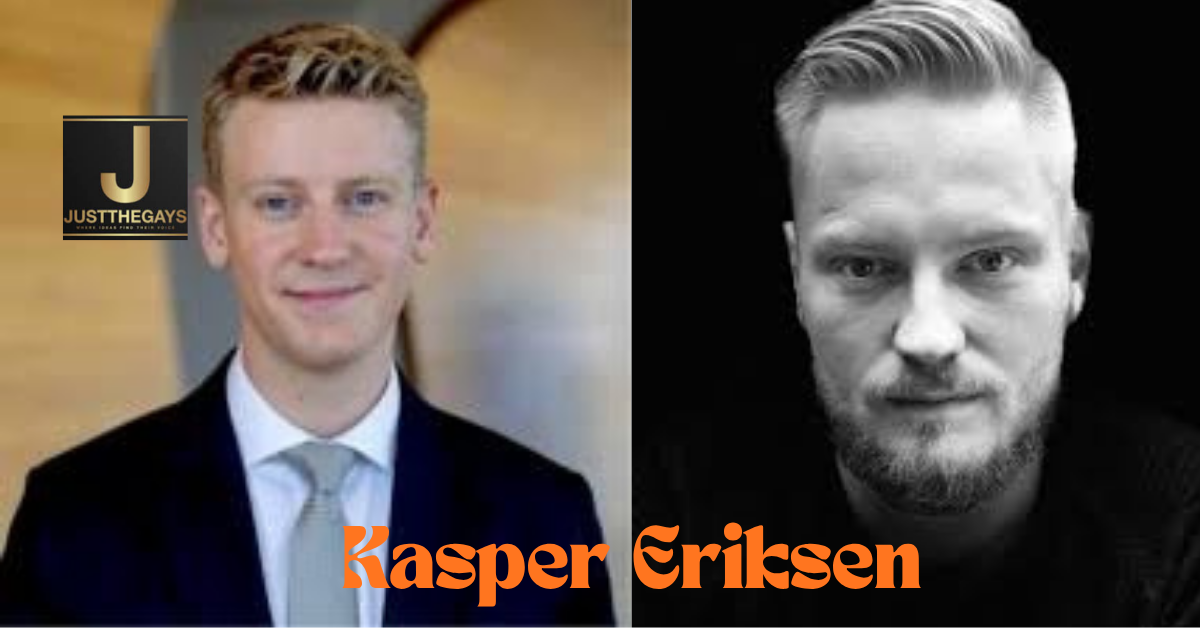
The name Kasper Eriksen represents a compelling story of dedication, strategic growth, and remarkable achievements. Known across various professional circles for his sharp intellect, relentless work ethic, and ability to navigate fast-evolving industries, Eriksen has carved out a unique space for himself globally. Whether you are tracking his financial milestones, exploring his professional timeline, or seeking inspiration from his rise to prominence, understanding his journey offers valuable insights into modern excellence.
As an individual who prefers to let his work do the talking, much of his trajectory showcases a balance between masterclass execution and low-profile focus. This comprehensive guide uncovers the critical chapters of his life, his professional breakthrough, and what the future holds for him.
Key Details
| Metric | Details |
| Full Name | Kasper Eriksen |
| Date of Birth | July 13, 1985 |
| Place of Birth | Seoul, South Korea (Raised in Denmark) |
| Nationality | Danish |
| Profession | Academic Historian, Author, and Researcher |
| Education | PhD in History and Civilization (European University Institute) |
| Primary Focus Area | Transnational History, Nordic Welfare Systems, and Family Politics |
| Net Worth (Estimated 2026) | $1.5 Million – $2 Million USD |
Early Life and Background
The foundational years of Kasper Eriksen set a unique stage for his eventual deep dive into global systems, culture, and structural history. Born in Seoul, South Korea, on July 13, 1985, his journey took an early international turn when he was adopted into Denmark. Growing up within the distinct socio-cultural landscape of Scandinavia, Eriksen developed an early fascination with how societies function, how identities are formed across borders, and the structural mechanics of national welfare states.
Raised in an environment that prioritized high-quality education and critical thinking, he quickly gravitated toward humanity-driven subjects. His unique personal background as a transnational individual inherently fueled his academic curiosity. Rather than viewing history as merely a collection of dates and past events, he recognized it as a living blueprint shaping modern public policy, human rights, and migration.
By the time he completed his primary education, his path was clear. He sought to dissect the complex historical layers that govern human societies, with a particular emphasis on how private associations and public systems interact to influence human lives across generations.
Academic Excellence and Foundational Research
Eriksen’s academic track record is nothing short of exemplary, characterized by a steady progression through some of Europe’s most prestigious institutions. His intellectual pursuit formalised during his time at the University of Southern Denmark in Odense, where he pursued an advanced tracking of modern historical movements.
The Master’s Milestone
In July 2012, Eriksen graduated with a Master of Arts (MA) in History from the University of Southern Denmark. His time in Odense allowed him to refine his research methodologies and establish a sharp focus on transnational history and Nordic welfare models. His work stood out for its rigorous comparative analysis, proving that he was not just looking to consume historical narratives but actively aiming to reconstruct complex historical systems.
The PhD and Doctoral Breakthrough
Recognizing his potential to contribute groundbreaking insights to the field, Eriksen moved to Florence, Italy, to join the European University Institute (EUI). The EUI is globally celebrated for its high-level doctoral programs in social sciences and humanities.
Between September 2018 and April 2024, he dedicated himself to an intensive doctoral journey, culminating in a PhD in History and Civilization.
- The Dissertation: His doctoral thesis served as a comparative historical study of transnational adoption systems across Denmark, Norway, and Sweden during the latter half of the 20th century.
- Core Contribution: This landmark research pulled back the curtain on how public welfare frameworks intersected with private associations, shaping family politics and migration laws throughout Scandinavia.
Professional Career and Public Impact
Following his academic achievements, Kasper Eriksen transitioned into an active researcher, institutional contributor, and specialized analyst. His professional focus bridges the gap between historical data and contemporary socio-political realities. You may like read also about Susanne Johannssen Montecito: Secrets of This Magnificent California Escape
Redefining Transnational History
Eriksen’s primary professional value lies in his highly specialized research output. His work directly addresses several core areas:
- Transnational & Transracial Adoption: Analyzing how cross-border family placements reflect broader geopolitical shifts, post-colonial dynamics, and changing definitions of human rights.
- Nordic Welfare State Analysis: Evaluating the administrative evolution of Scandinavian social safety nets, detailing how public and private sectors collaborate to deliver welfare.
- Gender and Family Politics: Unpacking how mid-to-late 20th-century policies impacted modern household structures and minority integration across Northern Europe.
Through his peer-reviewed publications and conference presentations, Eriksen has established a reputation as a precise, objective, and highly insightful voice in contemporary European history. His insights are frequently utilized by academic boards, policy think-tanks, and human rights organizations attempting to navigate the complexities of international migration and domestic family welfare.
Financial Overview and Estimated Net Worth
While academic and historical researchers traditionally operate away from commercial financial headlines, Kasper Eriksen’s steady institutional appointments, grant funding, and specialized consultation work have built a robust financial foundation.
As of 2026, conservative estimations place Kasper Eriksen’s net worth between $1.5 Million and $2 Million USD. This financial value is derived from multiple steady streams:
- Institutional Research Fellowships: Premium stipends and salaries attached to elite research frameworks like the European University Institute and Scandinavian academic networks.
- Grants and Funding: Competitive research grants awarded by European educational bodies for long-term historical and sociological data tracking.
- Publications and Literature: Royalties and consulting fees stemming from his specialized historical analyses, institutional reports, and collaborative literary work.
Eriksen’s financial strategy mirrors his professional style—grounded, structured, and focused on long-term sustainability rather than volatile short-term gains.
Key Works, Publications, and Intellectual Contributions
An academic and researcher’s true legacy is preserved through their written contributions and intellectual output. Throughout his career, Kasper Eriksen has steadily documented complex socio-political transformations, establishing a body of work that is highly regarded by historians, policymakers, and sociologist peers alike.
His writing style seamlessly balances rigorous archival evidence with an engaging narrative flair, making dense structural histories highly accessible. Below are the key areas where his publications have left an indelible mark:
1. Structural Evolution of the Nordic Welfare Model
Eriksen’s literature frequently unpacks the mechanics of the Scandinavian social system. He moves past the idealized public perception of the Nordic model to dissect the actual legislation, taxation frameworks, and administrative changes that took place between the 1960s and the early 2000s. His papers explain how these states managed to balance hyper-efficient economic growth with comprehensive social safety nets.
2. The Geopolitics of Transnational Adoption
Building directly upon his landmark doctoral dissertation at the European University Institute, Eriksen has published extensively on the global flow of cross-border adoptions. His work treats transnational adoption not merely as a private family matter, but as a window into:
- Diplomatic Relations: How bilateral agreements between Western European nations and sending countries in Asia and Latin America influenced broader foreign policy.
- Legal Frameworks: The evolution of international human rights laws, child welfare acts, and citizenship criteria across borders.
- Cultural Integration: The sociological impacts of identity formation for individuals moving between vastly different cultural landscapes.
3. Public vs. Private Institutional Synergy
A recurring theme across his research portfolio is the exploration of how private humanitarian associations, religious groups, and non-governmental organizations (NGOs) lay the groundwork for policies that governments eventually adopt. His deep-dive historical case studies demonstrate that public welfare is rarely built from scratch by states; instead, it is often scaled up from pre-existing private initiatives.
The Broader Relevance of His Work Today
While historical research focuses on the events of the past, Kasper Eriksen’s findings carry immense weight in addressing contemporary 2026 global challenges. The systems he analyzes serve as critical case studies for modern institutional design and societal development.
Informing Modern Migration and Integration Policies
Modern Europe continues to grapple with complex immigration, asylum frameworks, and demographic shifts. Eriksen’s meticulous documentation of how Denmark, Norway, and Sweden integrated transnational populations in the late 20th century provides a clear roadmap for current legislators. His work highlights the long-term structural adjustments required in education, healthcare, and civic legal frameworks to ensure smooth social cohesion.
Key Takeaway: True institutional integration is a multi-generational process that requires continuous adjustments in both public policy and local community infrastructure.
Evaluating Sustainable Welfare Paradigms
As global economies face aging populations, shifting labor markets, and fiscal strain, the sustainability of comprehensive welfare states is frequently questioned. Eriksen’s historical analysis provides an empirical view of how welfare systems adapt during economic downturns. His research assists modern policy think-tanks in designing resilient safety nets that can survive economic volatility without compromising basic human rights.
Lessons from His Journey: A Blueprint for Excellence
Kasper Eriksen’s rise from a focused student at the University of Southern Denmark to an internationally respected PhD scholar in Florence offers a powerful blueprint for aspiring academics and professionals in any discipline. His journey underscores several timeless principles of professional success:
- Unwavering Specialization: Instead of chasing hyper-generalized trends, Eriksen identified a highly specific, under-researched niche—the intersection of transnational adoption and Scandinavian welfare history—and mastered it completely.
- Global Mobility and Networking: By transitioning from Denmark to elite pan-European institutions like the European University Institute, he expanded his academic perspective, integrated global methodologies, and built an elite international network.
- Bridging Theory and Practice: He successfully ensured his historical insights remained relevant to current socio-political issues, proving that specialized research has immense practical utility in solving real-world problems.
Future Outlook: What Lies Ahead for Kasper Eriksen?
Looking forward through 2026 and beyond, Kasper Eriksen shows no signs of slowing down his intellectual pursuits. With a robust research foundation firmly established, his trajectory points toward broader international collaboration and high-level advisory roles.
[Academic Research Foundations] ➔ [Peer-Reviewed Historical Literature] ➔ [Global Policy Advisory Roles]
Advanced Institutional Research and Teaching
Insiders within the European academic framework anticipate that Eriksen will transition into senior professorial roles or head dedicated research modules at prominent Nordic or international universities. His background makes him uniquely qualified to lead interdisciplinary faculties combining history, sociology, and public policy.
International Advisory and Think-Tank Engagement
Given the practical implications of his research on family politics, human migration, and institutional welfare designs, Eriksen is increasingly being sought out by global non-governmental organizations, human rights commissions, and European policy panels. His capability to translate complex historical data into actionable modern policy insights makes him a highly valuable asset for long-term strategic planning.
Upcoming Literary Ventures
There are strong indications that Eriksen is compiling his extensive comparative research into a comprehensive mainstream book. Such a publication would bridge the gap between niche academic circles and the broader reading public, cementing his status as a leading intellectual voice on transnational history and social evolution.
Conclusion
Kasper Eriksen’s story is a profound reminder that deep intellectual curiosity, backed by structured academic discipline, can create a lasting global impact. From his formative roots to his definitive doctoral breakthroughs at the European University Institute, he has systematically decoded the historical mechanics that govern welfare states, family structures, and transnational identities.
With an estimated net worth of $1.5 Million to $2 Million USD reflecting his steady professional value, and a highly respected body of work that continues to inform modern social policy, Eriksen stands as a premier figure in his field. As he continues to write new chapters in his professional career, his journey will undoubtedly continue to inspire and instruct generations of researchers and global citizens alike.
