
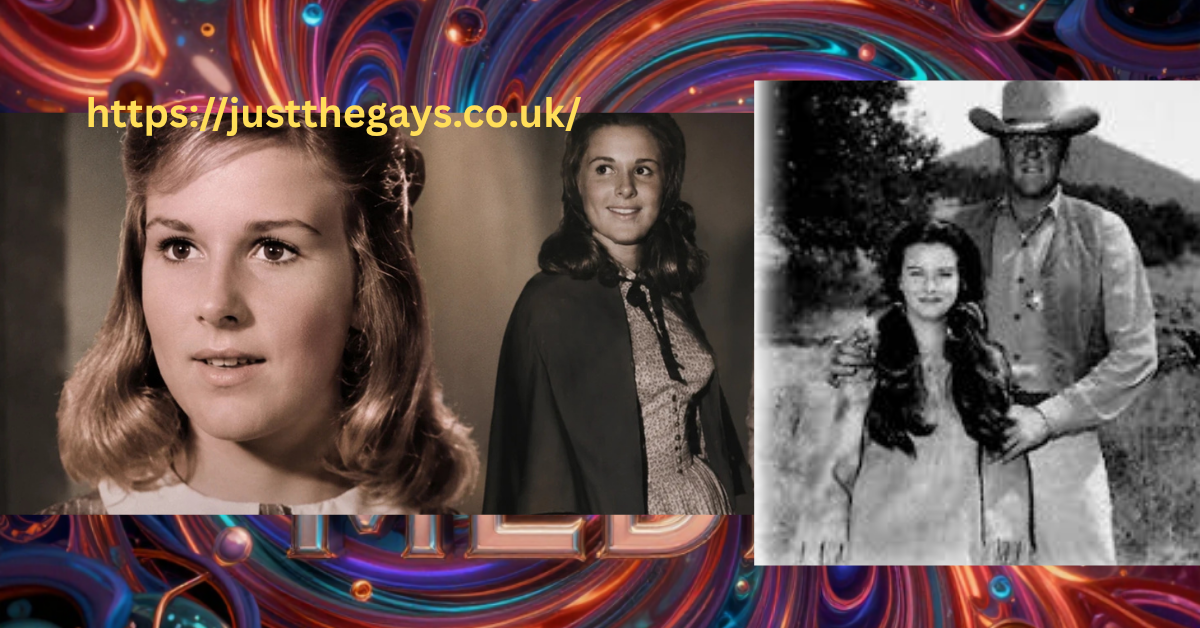
The name Arness is synonymous with the golden age of American television. For decades, James Arness graced screens as the iconic Marshal Matt Dillon in Gunsmoke, embodying the rugged virtues of the Old West. However, behind the towering presence of the Hollywood legend was a family story filled with both immense privilege and profound tragedy. At the heart of this narrative is Jenny Lee Arness, the only daughter of James Arness and his first wife, Virginia Chapman.
While her father was a household name, Jenny Lee Arness lived a life that was often shielded from the blinding glare of the paparazzi, yet deeply affected by the pressures of a high-profile upbringing. Understanding her story requires looking past the credits of a television show and into the complexities of a family navigating fame, mental health, and the transition of an era.
Quick Biography
| Detail | Information |
| Full Name | Jenny Lee Arness |
| Date of Birth | May 23, 1950 |
| Place of Birth | Los Angeles, California, USA |
| Father | James Arness (Actor) |
| Mother | Virginia Chapman |
| Siblings | Rolf Arness (Brother), Craig Arness (Adopted Brother) |
| Famous Uncle | Peter Graves (Actor, Mission: Impossible) |
| Nationality | American |
| Date of Passing | May 12, 1975 |
The Arness Family Tree: A Foundation of Fame
To understand Jenny Lee Arness, one must first understand the environment into which she was born. In 1950, when Jenny arrived, her father was on the cusp of becoming one of the most recognizable men in the world.
You may also like to read about Hugo Bachega Accent: A Deep Dive into the BBC Journalist’s Background
The Influence of James Arness
James Arness was more than just an actor; he was a cultural institution. Standing at 6’7″, he was a decorated World War II veteran who transitioned into acting under the mentorship of John Wayne. By the time Jenny was five years old, Gunsmoke had premiered on CBS, beginning a record-breaking 20-year run.
Growing up as the daughter of “Matt Dillon” meant that Jenny’s childhood was inextricably linked to the industry. However, James Arness was known to be a private man who valued his time away from the set, often retreating to the ocean or the mountains. This duality—public icon versus private father—shaped the household dynamic for Jenny and her brothers, Rolf and Craig.
Virginia Chapman and the Family Dynamic
Jenny’s mother, Virginia Chapman, was James Arness’s first wife. The couple married in 1948, but the marriage was frequently strained by the demands of James’s skyrocketing career. Virginia was often left to manage the household and the children while James spent long hours on the set of Gunsmoke. This period of Hollywood history was characterized by a “work-first” mentality, which often left the emotional needs of the family in the shadows of professional success.
Growing Up in the Shadow of Gunsmoke
The 1950s and 60s in Los Angeles offered a unique backdrop for a young girl. Jenny Lee Arness grew up in an era of transition. While her father represented the traditional, stoic values of the Western genre, the world around her was shifting toward the counter-culture movement of the late 1960s.
Education and Early Interests
Jenny was described by those who knew her as a sensitive and creative soul. Unlike many “Hollywood brats” who sought the limelight, Jenny appeared to be more reserved. She attended local schools in California and was known to be an avid animal lover—a trait she shared with her father.
Despite the wealth and access her father’s career provided, Jenny often struggled to find her own identity outside of being “James Arness’s daughter.” This struggle is a common theme among the children of mega-stars, where the shadow cast by the parent is so large that the child feels invisible within it.
Relationship with Siblings
Jenny was close to her brothers:
- Rolf Arness: A talented athlete who went on to become a World Surfing Champion in 1970.
- Craig Arness: James’s adopted son from Virginia’s previous marriage, who became a highly respected photographer for National Geographic.
While her brothers found outlets for their talents in surfing and photography, Jenny’s path was more internal and, unfortunately, more turbulent.
The Mental Health Struggle in a Different Era
It is impossible to discuss the life of Jenny Lee Arness without addressing the challenges she faced with her mental health. In the late 1960s and early 1970s, the understanding of clinical depression and psychological distress was vastly different than it is today.
The Pressure of Perfection
The Arness family was perceived by the public as the “All-American” family. This public perception often creates a “gilded cage” effect for the children involved. For Jenny, the pressure to maintain a certain image while dealing with internal emotional pain was a heavy burden.
History suggests that the divorce of her parents in 1960 had a lasting impact on her. The dissolution of the family unit, followed by her mother’s own struggles with mental health and substance issues, created a fractured foundation for Jenny during her formative teenage years.
A Lack of Modern Support Systems
During Jenny’s youth, therapy was often stigmatized, and the pharmacological treatments for depression were in their infancy. Many young people in Hollywood at the time turned to the burgeoning drug culture of the 1970s as a form of self-medication. While the specifics of Jenny’s private struggles remained largely out of the tabloids during her life, it became clear later that she was fighting a battle that she did not have the tools to win.
The Tragic Passing of Jenny Lee Arness
The story of Jenny Lee Arness took a tragic turn in 1975. On May 12, just weeks before her 25th birthday, Jenny Lee Arness passed away from a drug overdose.
The Circumstances
The news sent shockwaves through the entertainment industry. For fans of James Arness, it was a heartbreaking reminder that even those who seem to have “everything” are not immune to the tragedies of life. The overdose was ruled a suicide, a fact that added a layer of profound sadness to the Arness family legacy.
It was reported that Jenny had been struggling with a broken heart and ongoing depression. In the years following her death, it was revealed that she had allegedly been devastated by the end of a relationship with a high-profile individual, though the family remained characteristically private about the details.
The Impact on James Arness
James Arness was notoriously private about his personal grief. He rarely spoke of Jenny’s death in public, choosing instead to mourn away from the cameras. However, close associates noted that the loss of his only daughter changed him. He became even more protective of his privacy and poured much of his energy into his remaining children and his later marriage to Janet Surtees.
The loss of Jenny was followed a few years later by the death of her mother, Virginia, who also succumbed to a drug overdose in 1977. These back-to-back tragedies marked a dark period for the Arness family, contrasting sharply with the heroic, indestructible image James portrayed on screen.
Remembering Jenny Lee Arness Today
In the decades since her passing, Jenny Lee Arness has often been remembered as a “tragic figure” of Hollywood. However, it is important to remember her as more than just a statistic or a footnote in her father’s biography.
She was a young woman of the 1970s—a time of immense social change and personal searching. Her life serves as a poignant reminder of the human cost of fame and the critical importance of mental health awareness. Today, fans of Gunsmoke and James Arness often look back at Jenny’s life with a sense of empathy, recognizing the heavy mantle she carried.
The Cultural Impact of the Arness Legacy
To truly appreciate the context of Jenny Lee Arness’s life, one must look at the cultural weight the Arness name carried during the mid-20th century. This wasn’t just another Hollywood family; they were the faces of the American frontier spirit.
The Contrast Between Public Persona and Private Reality
In the 1960s, the “Generation Gap” was becoming a prominent social phenomenon. While James Arness represented the establishment—authority, grit, and traditional morality—Jenny and her peers were navigating a world of rock and roll, social upheaval, and a search for individual meaning.
This contrast often created an invisible wall within celebrity households. For Jenny, living up to the “Dillon” family standard while the world was changing so rapidly likely added to her sense of displacement. The public looked at the Arness family and saw strength, but inside, like many families, there were vulnerabilities that the cameras never captured.
The Role of the Media in the 1970s
Unlike the aggressive, 24-hour digital news cycle of today, the media in 1975 was more reserved. There was a level of respect shown to icons like James Arness that shielded the family from immediate, intrusive speculation. However, this also meant that the issues Jenny faced, such as clinical depression, were kept “under the rug.”
The silence surrounding mental health in that era prevented the kind of public discourse that might have helped others in similar positions. Today, Jenny’s story is often used by historians and biographers to illustrate the “dark side” of the Hollywood dream—a side where the wealth and status of a parent cannot always protect a child from internal struggles.
The Arness Brothers: Carrying the Torch
While Jenny’s life was cut short, her brothers Rolf and Craig continued to navigate the complexities of their father’s fame, each finding their own way to distinguish themselves.
Rolf Arness: Finding Peace in the Waves
Rolf Arness is perhaps the most prominent example of an Arness child carving out an independent identity. Instead of following his father onto the soundstage, Rolf took to the Pacific Ocean.
- The 1970 World Champion: In a feat that mirrored his father’s professional dominance, Rolf won the World Surfing Championship at Johanna, Australia.
- A Different Kind of Spotlight: Rolf’s success was physical and spiritual. Surfing allowed him to escape the “Western Hero” shadow of his father and find a community that valued him for his skill on a board rather than his last name.
Craig Arness: Capturing the World Through a Lens
Craig Arness, James’s adopted son, turned his focus toward photography. His career was incredibly distinguished:
- National Geographic: Craig became a staple photographer for the prestigious magazine, traveling the world to capture images of various cultures and landscapes.
- Westlight: He founded one of the first highly successful stock photography agencies, Westlight, which was eventually acquired by Corbis.
- Legacy of Art: Craig’s work provided a visual legacy for the family that was entirely separate from acting, proving that the Arness creative spark could manifest in many different forms.
Lessons from the Arness Family Narrative
The story of Jenny Lee Arness and her family is a tapestry of American life. It contains elements of the “Greatest Generation,” the burgeoning counter-culture, the heights of professional success, and the depths of personal loss.
1. The Importance of Mental Health Advocacy
Jenny’s passing is a stark reminder of why mental health awareness is vital. In the modern era, we have developed a vocabulary for depression and anxiety that didn’t exist in 1975. By discussing her life, we honor the reality that mental health struggles are not a sign of weakness, nor are they cured by external success.
2. The Nuance of Celebrity Families
We often view celebrities as one-dimensional figures, but the Arness story shows the multi-generational impact of fame. It highlights the necessity of supporting the children of high-profile individuals, who often face unique psychological pressures.
3. Resilience and Privacy
James Arness’s ability to continue his work while maintaining his dignity in the face of such profound loss is a testament to his character. He showed that it is possible to grieve privately while still fulfilling one’s professional duties, though the cost of that stoicism is something only he truly knew.
Final Reflections on Jenny Lee Arness
Jenny Lee Arness was born into a world of stardust and shadows. While history often remembers her for the tragic end of her life, those who look closer see a young woman who was part of a legendary American era. She was a sister, a daughter, and an individual who sought her own peace in a world that often demanded she be a reflection of her famous father.
As we look back at the legacy of James Arness and the impact of Gunsmoke, it is only right to reserve a place in that history for Jenny. Her life, though short, adds a layer of human depth to the Arness name, reminding us that behind every icon is a human story—complex, painful, and profoundly real.
Key Takeaways
- Identity: Jenny struggled to establish an identity separate from her father’s massive “Matt Dillon” persona.
- Family Tragedy: Her death in 1975 was a pivotal and devastating moment for the Arness family.
- Mental Health: Her story underscores the evolution of how society handles and discusses psychological well-being.
- Legacy: She remains a poignant figure in Hollywood history, representing the silent struggles of the “golden age” children.
Conclusion
The name Jenny Lee Arness may not be on the Hollywood Walk of Fame, but her story is an essential thread in the fabric of the Arness family legacy. By remembering her, we acknowledge the full spectrum of the human experience—the triumphs of the screen and the quiet, often difficult realities of life behind the scenes
Change text alignment
Displays more block tools
